Due to the high sugar content and its excellent taste, honey is a fav treat for young and old. The taste of honey is a mix of nectars collected from the flowers/blossoms bees have “visited” at a moderate distance from the beehive.
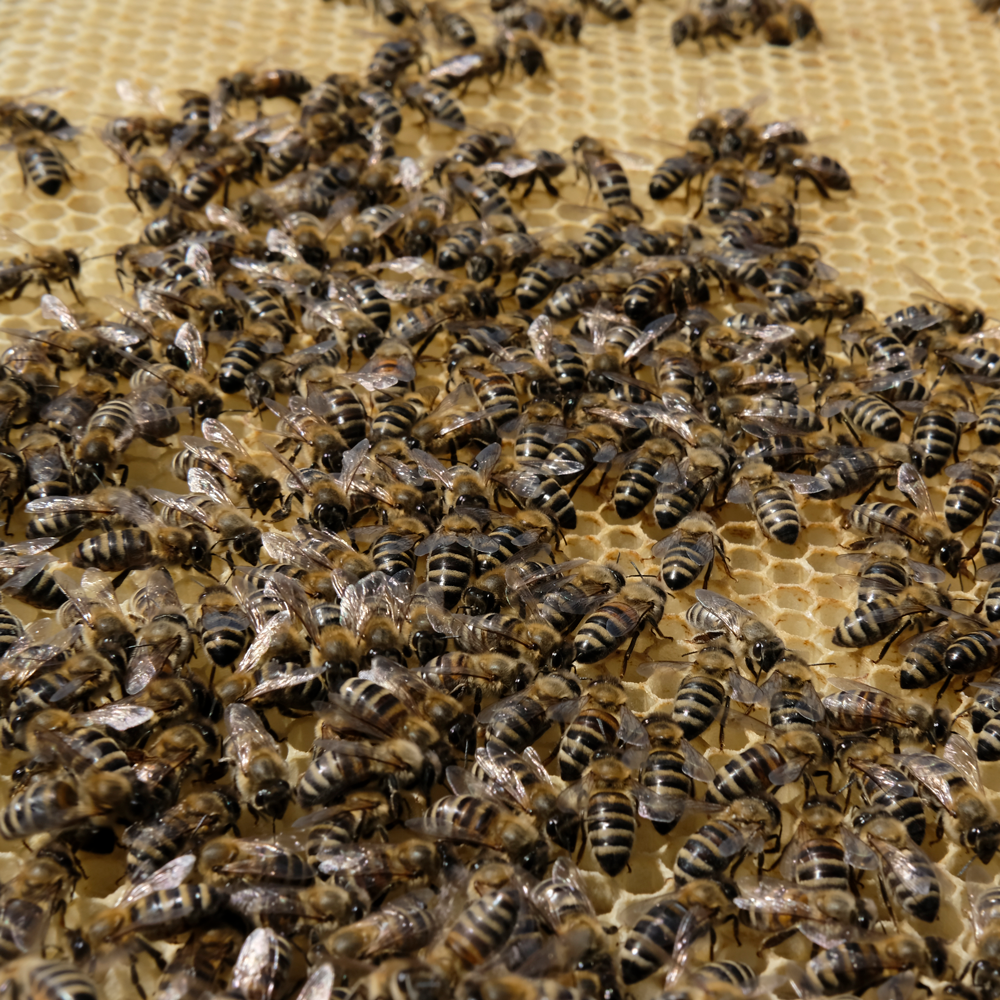
Another widely known product is beeswax, secreted by the bees’ glandular secretions – bees use it as a building material to make hexagonal cells, where the queen lays eggs and bees multiply, as well as to store honey and pollen. Beeswax is known as a product of over 100 uses, including the production of wax candles, cosmetic goods, soap, wax, impregnator dyes – to name a few.
In addition, bee products – honey, propolis, royal jelly, bee sting, bee larvae, etc. – are used in medicine. These commodities are often advertised as parts of medicinal/medical ingredients or as dietary supplements in traditional medicine.
Different species of bees have different roles as pollinators, together with some species of bats, whether it is specialized pollination in order to maintain biodiversity or large-scale pollination of crops. For this reason, in addition to honeybees, we need all kinds of pollinators and their preservation must take place in its entirety.